Services
October 5, 2026
5 min read
DIY Car Wrap vs. Professional Install:
What You're Really Getting Into
Thinking about a DIY car wrap? See the real costs, tools, common mistakes and when a professional install in Calgary is the smarter call.
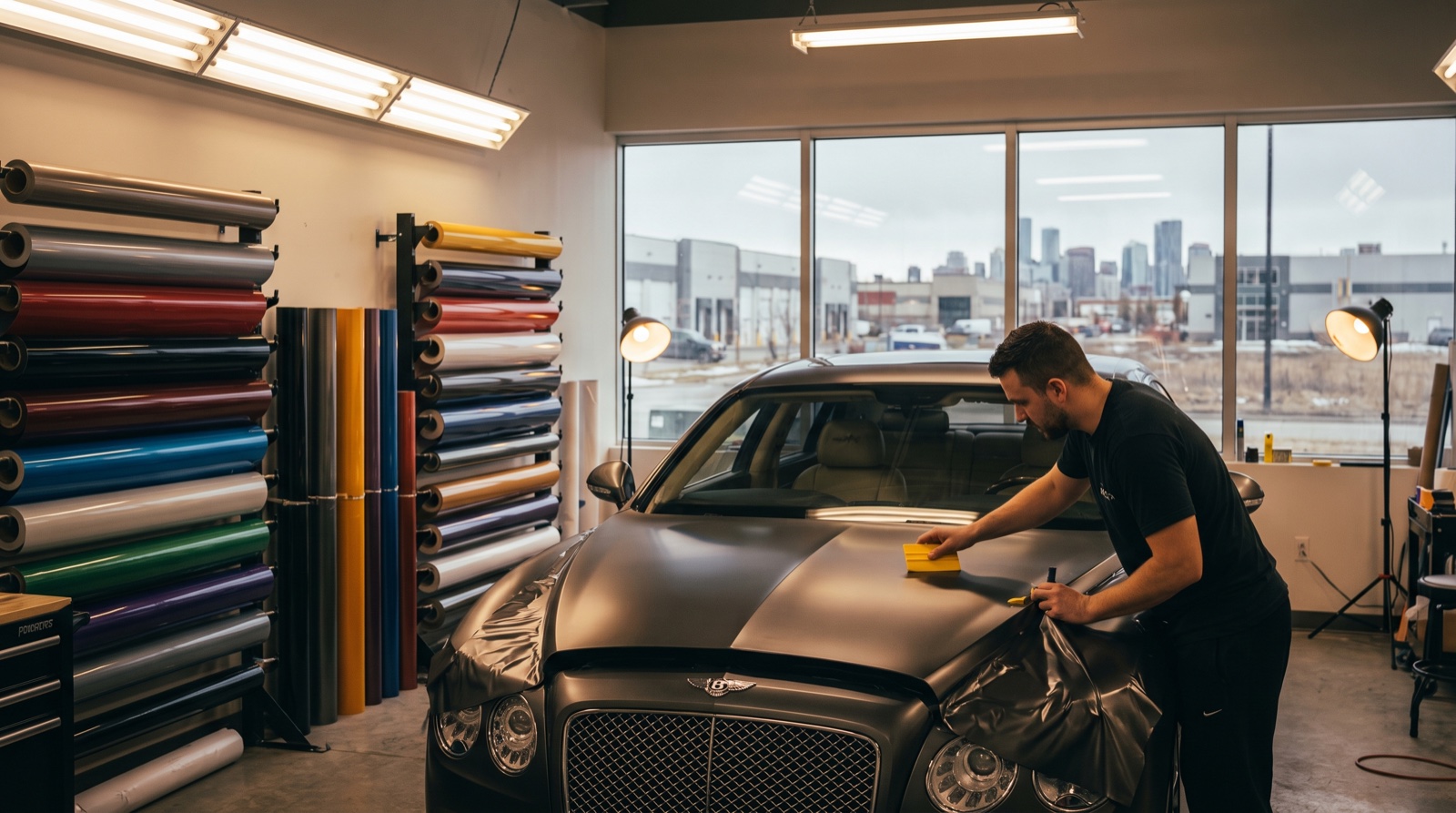
You can wrap your own car, but a full colour change is one of the harder DIY jobs you can take on. Most first attempts end with wasted vinyl, visible seams, and edges that lift within a few months.
Small, flat panels are realistic for a patient beginner. Full vehicles with deep bumpers and compound curves are where the gap between DIY and professional work shows.
What a DIY Wrap Actually Costs
Vinyl is the biggest expense, but it is not the only one. A typical sedan needs roughly 50 to 60 feet of 60 inch film, and quality cast vinyl from a brand like 3M or Avery Dennison often runs $800 to $1,400 in Canada for that amount.
Cheaper calendared film costs less, but it shrinks, fights you on curves, and can leave adhesive behind at removal. It is a poor place to save money.
You also need tools before you start:
- Heat gun and an infrared thermometer
- Squeegees with felt buffers
- Knifeless tape and snap blades
- Wrap magnets and wrap gloves
- Isopropyl alcohol, clay bar, and lint free towels
- Trim removal tools
Budget another $150 to $300 for that kit. Order 10 to 20 percent more film than you think you need, because you will almost certainly redo at least one panel.
The cost most people miss is space. Vinyl needs a clean indoor area held at around 20°C, which rules out most unheated Calgary garages from October through April.
Where DIY Wraps Go Wrong
Surface Prep
Vinyl shows everything underneath it. A single grain of dust becomes a visible bump, and any wax, road film, or leftover mag chloride from an Alberta winter will stop the adhesive from bonding.
Overstretching
Beginners tend to pull the film hard to get around bumpers and mirrors. Overstretched vinyl thins out, changes colour, and slowly pulls back out of recesses over the following weeks.
Cutting on Paint
Trimming film with a blade directly on the panel is how clear coat gets scored. Installers use knifeless tape or cut with very controlled pressure, and that control takes a lot of cars to develop.
Edges and Post Heating
Every stretched area and every edge needs to be post heated to the temperature the manufacturer specifies. Skip that step and Calgary's chinook temperature swings, gravel roads, and car washes will lift the edges quickly.
DIY vs. Professional Install at a Glance
| Factor | DIY | Professional |
|---|---|---|
| Upfront cost | About $1,000 to $1,700 in film and tools | Higher, with labour included |
| Time | 40 to 60 hours or more for a first full wrap | Usually 2 to 5 days in the shop |
| Finish | Seams, wrinkles, and relief cuts likely on complex areas | Tucked edges and parts removed for clean coverage |
| Mistakes | You pay for replacement film | The shop is responsible for redoing its work |
| Paint risk | Real risk of knife cuts | Low, with proper cutting methods |
| Workspace | Your garage, as is | Heated, clean, well lit bay |
The price gap narrows once you count wasted material and your own time. A failed bumper or hood can mean buying a second run of film just for that panel.
Projects That Make Sense to Do Yourself
If you want to learn, start small. Good first projects include:
- A roof or hood on a vehicle with simple shapes
- Mirror caps
- Interior trim pieces
- Straight window trim
These use little material, so a mistake costs you $50 instead of $500. They also teach you how the film behaves with heat before you commit to a whole car.
If you like the look but not the learning curve, the same jobs are quick work for a shop. We handle roof, hood, and accent wraps and blacked out window trim at a fraction of the price of a full wrap.
When to Hire an Installer
Some jobs are poor candidates for a first attempt, no matter how many videos you watch.
- Full colour changes. Bumpers, door handles, and door jambs are where experience matters most, which is why a complete colour change is usually best left to a shop.
- Specialty films. Chrome, gloss metallics, and textured finishes mark easily and show every flaw.
- Protective film. Paint protection film is thicker than vinyl, goes on wet, and is far less forgiving of errors.
- Business vehicles. Printed graphics for work trucks and vans have to line up across panels, and a crooked logo is seen by every customer.
- Vehicles with imperfect paint. Chips, rust, and failing clear coat need to be assessed before any film goes on.
Resale and removal matter too. Film that was overheated, overstretched, or cut into the paint is harder to remove cleanly later.
The Honest Bottom Line
DIY wrapping is worth trying if you enjoy the process, have a warm and clean space, and can live with an imperfect result. It is a poor choice if your main goal is saving money on a daily driver you want to look right.
If you would like a firm number to compare against your DIY budget, get in touch for a quote or call Car Wrap Calgary at (587) 843-5088. We can price the full vehicle or just the panels you would rather not attempt yourself.
Skip the Wasted Vinyl. Get a Quote.
Tell us about your vehicle and we will price a full or partial wrap so you can compare it against doing the job yourself.