Materials
July 29, 2026
5 min read
How Long Does a Car Wrap Last
in Calgary, AB?
A quality car wrap lasts 5 to 7 years in Calgary. See how UV, chinooks and road salt affect vinyl lifespan, plus how to make yours last longer.
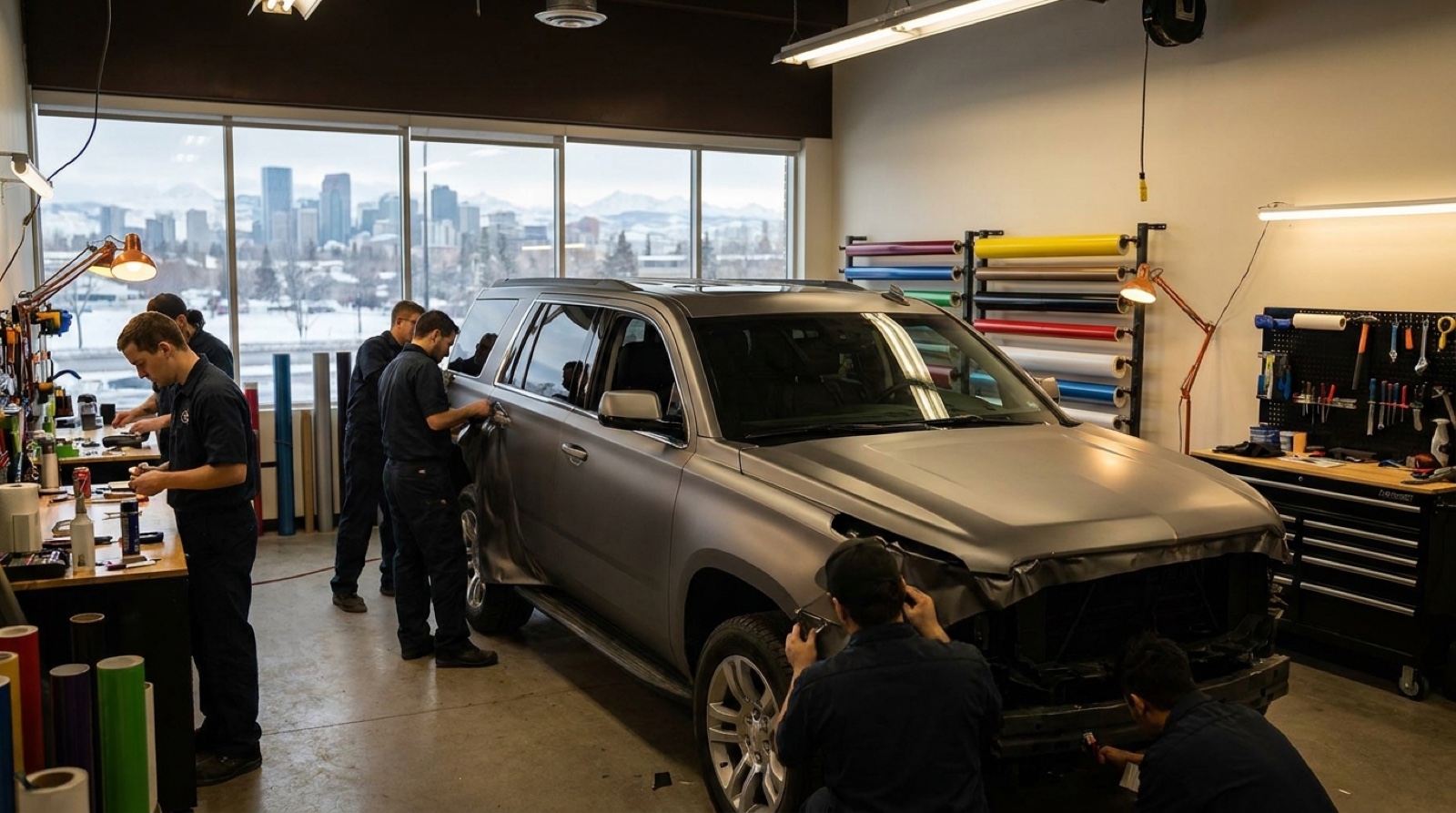
A quality cast vinyl wrap lasts five to seven years in Calgary. Cheaper calendared film, or a wrap that lives outdoors through every winter, often starts failing at the three year mark.
That spread is not random. Material grade, install quality and where the vehicle parks account for almost all of the difference.
Why Calgary Is Harder on Vinyl Than Most Cities
Calgary sits about 1,045 metres above sea level. Thinner atmosphere means stronger UV exposure than nearly any other major Canadian city, and UV is the number one cause of colour fade and adhesive breakdown in wrap film.
Then there are the chinooks. A swing from minus 20 to plus 10 in a single afternoon is normal here, and vinyl expands and contracts with every one of those cycles.
That constant movement stresses the places where film is already working hardest. Edges, seams, door handle recesses and deep bumper contours are where lifting shows up first.
Winter road treatment adds a third factor. Pickled gravel chips the leading edge of hoods and mirrors, and salt brine finds its way under any edge that has started to lift.
Typical Lifespan by Wrap Type
Not every wrap ages at the same rate. Printed graphics and specialty finishes have a shorter working life than a solid colour change in premium film.
| Wrap Type | Calgary Lifespan | Notes |
|---|---|---|
| Full colour change, cast vinyl | 5 to 7 years | Gloss and satin age best |
| Partial wrap or accent panels | 4 to 6 years | More exposed edges to maintain |
| Chrome delete and trim | 5 to 7 years | Small panels, low stretch |
| Printed commercial graphics | 3 to 5 years | Ink fades before the film fails |
| Chrome and colour shift finishes | 2 to 4 years | Least UV tolerant |
| Paint protection film | 7 to 10 years | Self healing topcoat, clear |
A full colour change in premium cast film is the most durable option in the vinyl category. Matte and textured finishes sit slightly below gloss because they hold contaminants in the surface texture.
What Actually Shortens a Wrap's Life
Parking Outside Year Round
A vehicle that sits in a Calgary driveway 24 hours a day takes roughly double the UV load of one kept in a garage or underground parkade. That alone can cut two years off the same film.
South facing horizontal surfaces go first. Roofs, hoods and trunk lids fade and chalk well before the doors show any change.
Brush Car Washes
Spinning brushes catch wrap edges and drag them. One winter of weekly brush washes will lift more seams than five years of hand washing.
Touchless bays are safer, though the high alkaline soaps used in many of them are aggressive on matte finishes. Hand washing with pH neutral soap is still the standard.
Rushed Prep and Cheap Film
Adhesion depends on a surface that is genuinely clean. Wax, sealant, tar and residual salt film all interfere with the bond, and no amount of heat afterward fixes a bad prep job.
Calendared vinyl is the other common shortcut. It costs less, but it wants to shrink back to its original shape and pulls away from recesses within a couple of seasons.
Damaged Paint Underneath
Vinyl only sticks as well as the surface it is applied to. Failing clear coat, previous body filler or aftermarket respray work will release the film early, regardless of how well it was installed.
How to Reach the Seven Year End of the Range
- Park indoors whenever it is an option, especially through July and August
- Hand wash every two weeks in winter to clear salt and brine off the lower panels
- Skip pressure washing within about 30 cm of any edge or seam
- Remove bird droppings, tree sap and fuel spills the same day they happen
- Use a vinyl safe ceramic or sealant to add a UV barrier on top of the film
- Have lifted edges re-sealed early rather than waiting for the panel to peel
Owners who follow that routine routinely get six or seven years out of a wrap in this climate. Owners who do not usually replace at four.
Signs the Wrap Is Reaching the End
Colour fade is the obvious one, and it usually appears on the roof and hood before anywhere else. Compare a horizontal surface to a lower door panel in daylight to judge it.
Edge lifting around wheel arches, mirrors and door handles is the second sign. Cracking or a brittle feel when you press the film means the plasticizers have gone and removal should not wait much longer.
Vinyl left too long becomes far harder to take off. It tears into small pieces instead of pulling in sheets, and the adhesive bakes on, which turns a straightforward removal into a long labour bill.
Does the Wrap Protect the Paint?
Yes, within limits. A wrap shields factory paint from UV, light scratching and the general grit of Deerfoot Trail commuting, and paint under a wrap almost always looks better than the exposed panels around it.
What vinyl does not stop is rock chips at highway speed. For that, a clear urethane film on the impact zones is the correct product, and it is common to run it on the hood and mirrors underneath a full colour wrap.
Businesses running printed graphics on work vehicles should plan around the three to five year window instead. Ink and laminate age faster than solid colour film, and most fleets rebrand within that period anyway.
Planning Your Replacement
If your current wrap is past year four, it is worth a look before another Calgary winter. Smaller jobs such as a trim blackout or a few accent panels can often be refreshed on their own without redoing the whole vehicle.
Bring the vehicle by or send photos and we will give you an honest read on how much life is left. Get in touch for a quote and we will walk through film options, timelines and what each one realistically holds up to here in Alberta.
Wondering How Much Life Your Wrap Has Left?
Send us a few photos or stop by and we will give you a straight answer on film condition, remaining lifespan and replacement cost.